Why Your Blowout Falls Flat by Noon (And What I Finally Learned to Fix It)
You know that feeling when your blowout looks incredible for maybe 20 minutes, and then... it just disappears? Suddenly you're digging through your purse for a hair tie, defeated before lunch.
I lived this for years. I'd watch tutorials, buy the products everyone recommended, and still end up with hair that looked salon-fresh for an hour and tragic by the time I got to work.
Then I started paying closer attention—not just to what stylists were doing, but why. I watched my own stylist, stalked professional tutorials, compared notes with friends who somehow always had great hair. And I finally figured out what nobody was actually explaining to us.
Turns out, our blowouts don't fail because we're bad at this. They fail because we learned through random tips that were never designed for our specific hair, our routine, or what we're actually trying to achieve.
Which Blowout Problem Do You Have?
After way too much trial and error, I've realized there are really only three ways a blowout falls apart. See if any of these sound familiar:
The Volume Vanisher — You start with lift and bounce, but by noon everything has collapsed. You look in the mirror and wonder where your hair went.
The No-Movement Girl — Your hair looks styled, technically. But it just... sits there. No bounce, no body, no life.
The Frizz Balloon — You leave the bathroom looking sleek and smooth. Two hours later, you've puffed up into something you didn't sign up for.
I've been all three of these at different points. Sometimes in the same week.
The Thing Pros Do That Nobody Explains

Here's what finally clicked for me: stylists don't treat hair as one thing. They treat it as three zones—roots, mids, and ends—and each zone gets completely different attention.
Once I started thinking about it this way, everything changed.
Your Roots Are the Whole Foundation
I used to start my blowout a few inches away from my scalp. It felt safer, and I figured the roots would dry eventually anyway.
Wrong.
If your roots stay even a little damp, you're basically undoing all your work. Something about the moisture breaking down the bonds that heat just created—I don't fully understand the science, but I understand the result: flat, lifeless hair by lunchtime.
Now I get as close to my scalp as possible and make sure those roots are completely dry before I move on. The trick to not burning yourself is angling the nozzle away from your scalp while keeping the airflow on your roots. It actually feels better on your wrist too.
This also helps with frizz, by the way. When I don't fully dry my roots, I've noticed the frizz starts right there and travels down. Getting them bone dry stops it at the source.
Your Mids Need Tension (Enter DrySpike)
The middle of your hair is most of what people see, so it needs to look good. This is where I was messing up the most.
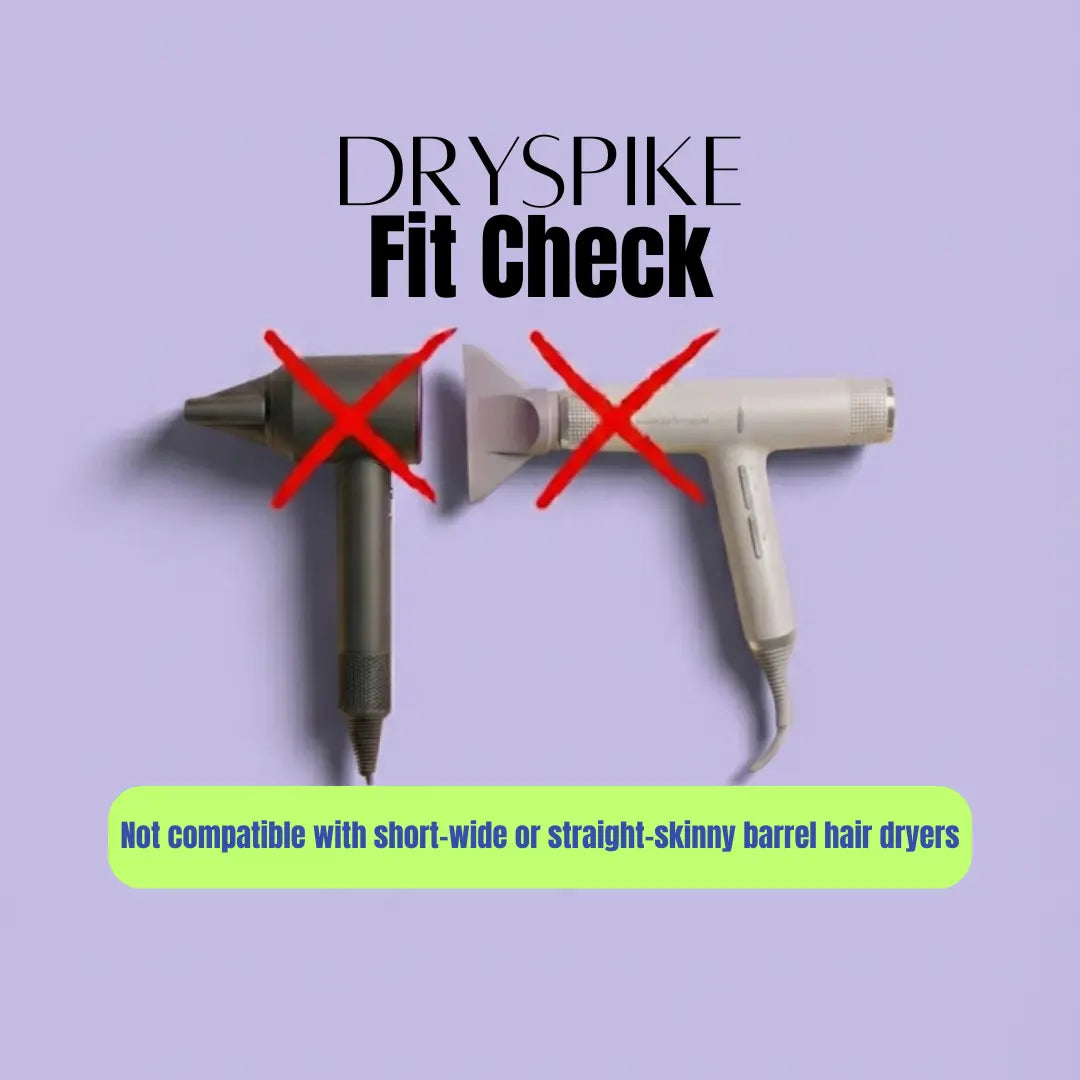
I used to rest my hair on top of the brush and wonder why it came out wavy and frizzy instead of smooth. Then I watched a stylist work and noticed she always puts the brush on top of the hair section, not under it. The hair has to pass through the bristles, which creates tension and keeps everything straight. Having a DrySpike helps keep all that tension during the transition back to the roots. Your hair will be tight throughout the process.
Game changer.
The other thing I learned: point your dryer at the hair that just came off the brush, not at the brush itself. Apparently when you aim at the brush, moisture gets trapped in there and you end up putting humidity back into hair you just dried. Which explains so much about my frizz problems.
Your Ends Are Where the Bounce Lives
This one surprised me the most. I always focused on my roots for volume and kind of let my ends just... fall off the brush when I got to the bottom of a section.
Turns out that's why I could never get any movement or bounce. Those ends were basically air-drying, not blow-drying. They'd come out looking dry and splitty even though my hair was healthy.
Now I roll my ends onto the brush at the end of each section and hold them there for like 30 seconds. The heat from the barrel smooths them and creates that curled, bouncy finish. It's the difference between "I styled my hair" and "my hair looks good."
Oh, and if you can't get bounce no matter what? Your brush might be too big. Smaller barrels create tighter curls. I was using a huge brush because it was easier to work with, but my ends couldn't wrap around it enough to get any real shape.
The Products That Actually Matter
I used to have like twelve products in my bathroom for blowouts. Now I use three, and my results are way better.
Leave-in conditioner goes on the second I towel dry. Your hair starts losing moisture immediately after you shower, and this locks it in. I do about 12-16 sprays all over. It makes the whole process more forgiving and cuts down on frizz.
Blow dry cream protects from heat and gives you that soft, touchable texture. The key is using way less than you think—like a pea-sized amount. And you apply it from ends up, not roots down. Most of it goes on your ends, a little on your mids, barely anything on your roots. Too much up top and you'll look greasy.
If you're a Volume Vanisher like me: I also add a volumizing mist to my roots only. Just a few sprays around my crown, on wet hair, right after the blow dry cream.
Hair oil is your finishing step. The whole point of staying light during styling is keeping your hair bouncy, so it's actually normal to look a little dry or frizzy right after blow-drying. That means you did it right. A few drops of oil smoothed through—focusing on the frizzy spots—gives you that polished finish without weighing everything down.
One rule I learned the hard way: oil doesn't go near your roots unless you have really coarse hair and know what you're doing. Otherwise, hello grease.
The Mistakes I Had to Stop Making
Some of these feel obvious in hindsight. Others I was doing for years without realizing.
Starting with hair that isn't actually clean. I thought I was washing well. I was not. Any oil or buildup left behind will weigh your blowout down and kill your volume. If your blowout falls flat immediately, this might be the problem. I had to learn to really scrub my scalp and shampoo twice to get everything out.
Blow-drying too long (or not long enough). There's a sweet spot. If your hair feels cold or room temperature, there's still water in there—keep going. If it's so hot it burns your hand, you're damaging it. You want comfortably warm, like clothes out of the dryer. That's your sign to move on.
Getting your hair too dry before you even start. I'd heard "rough dry to 80% before using a brush" a million times. But that's not right for everyone. It depends on your hair.
If you have coarse hair, you basically can't rough dry at all. Air drying for even 10 minutes leads to frizz city.
Medium hair can rough dry to about 60%.
Fine hair can handle up to 80% because it has more problems with oil than frizz.
My rule now: rough dry until I see the first hint of frizz starting, then stop immediately. If you push past that, the blowout is already compromised.
What Changed for Me
Honestly? I stopped thinking of blowouts as one technique and started thinking of them as three separate jobs. Roots get dried completely for staying power. Mids get tensioned for smoothness. Ends get rolled for bounce.
That mindset shift—plus cutting down to products that actually work instead of everything that looked good at Sephora—finally gave me blowouts that last for days instead of collapsing by noon.
It's not about being good at hair. It's about understanding what your hair actually needs.
Still experimenting with what works for your hair type? Consider adding DrySpike to your tool kit.